Warning - information presented here is contributed by users and has not been verified or evaluated for accuracy or safety. Use caution and proceed at your own risk!
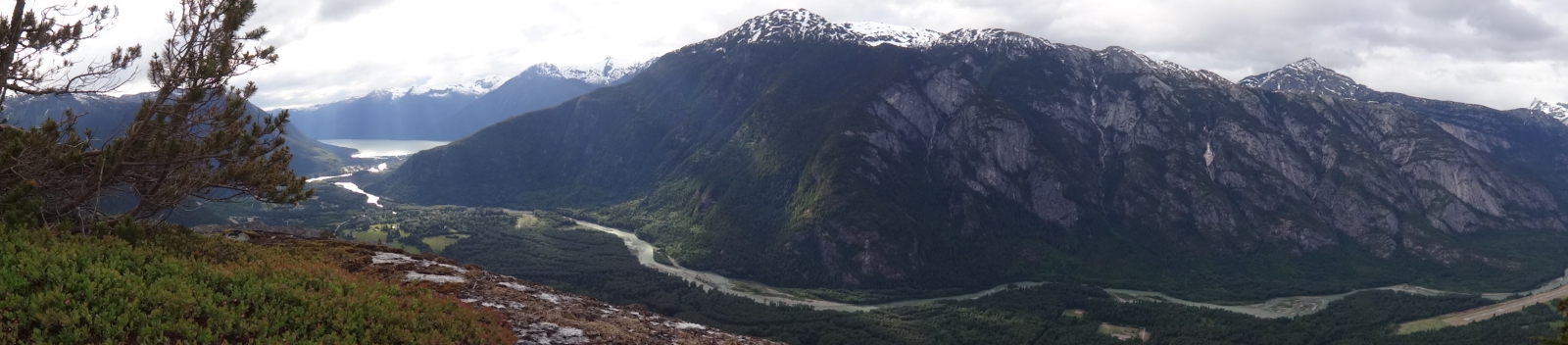
This trail ascends the broad buttress feature just downstream of Walker Island. A full-spectrum delight of an adventure, while still managing to be on the mellow side. A great winter-sun option (~November to ~April, so long as the river is low and easy to cross)... BYOBoat, launch from Walker Island (portage as necessary down to the slow-and-deep single-channel downstream of the ball park road access).
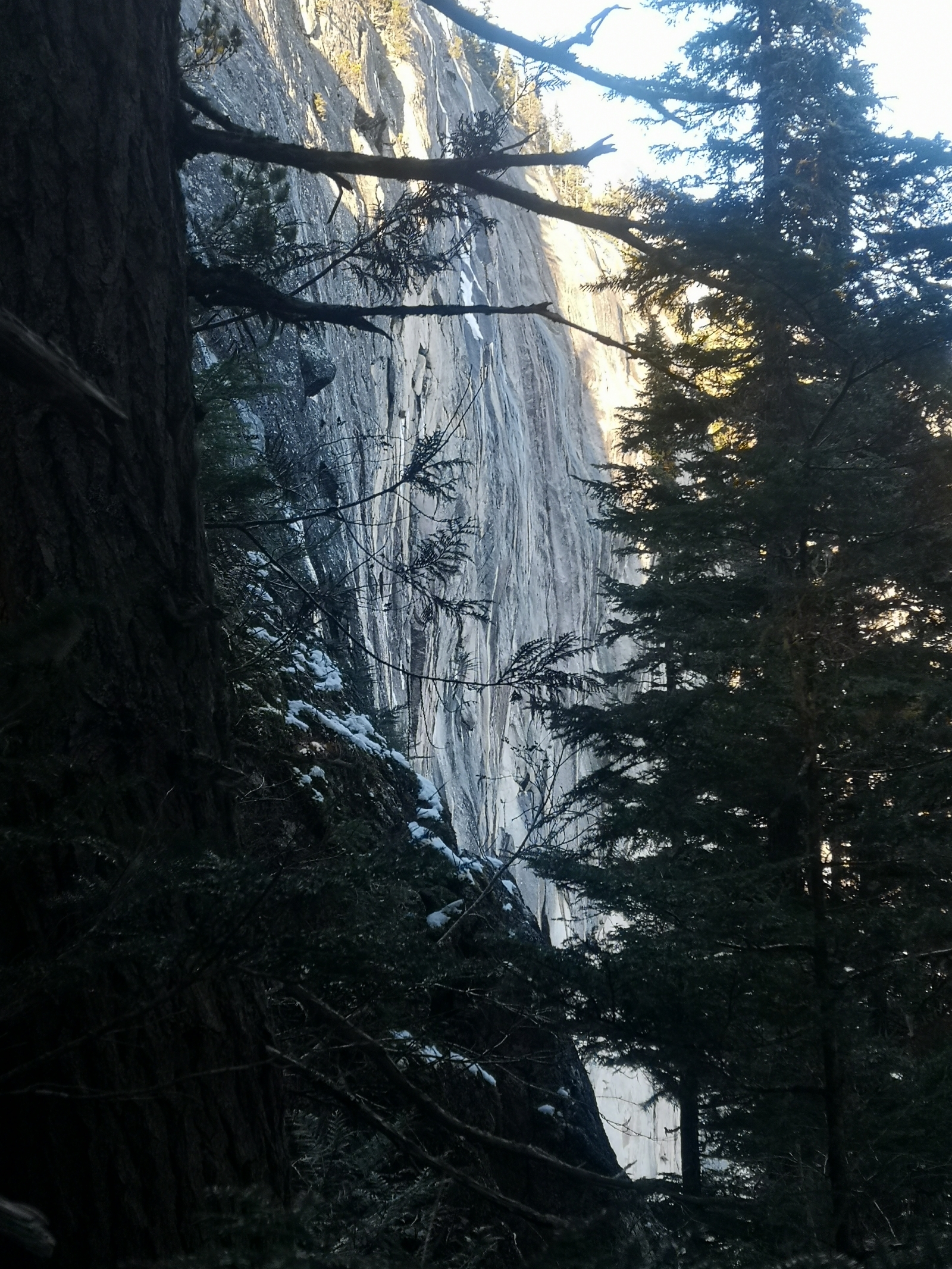
Cross the river, trend up and subtly left over easy ground along flagged route through old-growth Fir and Cedar forest, gradually closing distance to the main buttress feature of the trail ("the rocks") rising up on the left. After about 15min a well flagged and cut trail starts climbing more steeply up past a couple really massive Douglas Firs. Follow the trail over moderately-steep natural switchbacks through mossy oldgrowth, enjoying viewpoints and cliffbands every few hundred meters. Many points of interest, and generally great atmosphere.
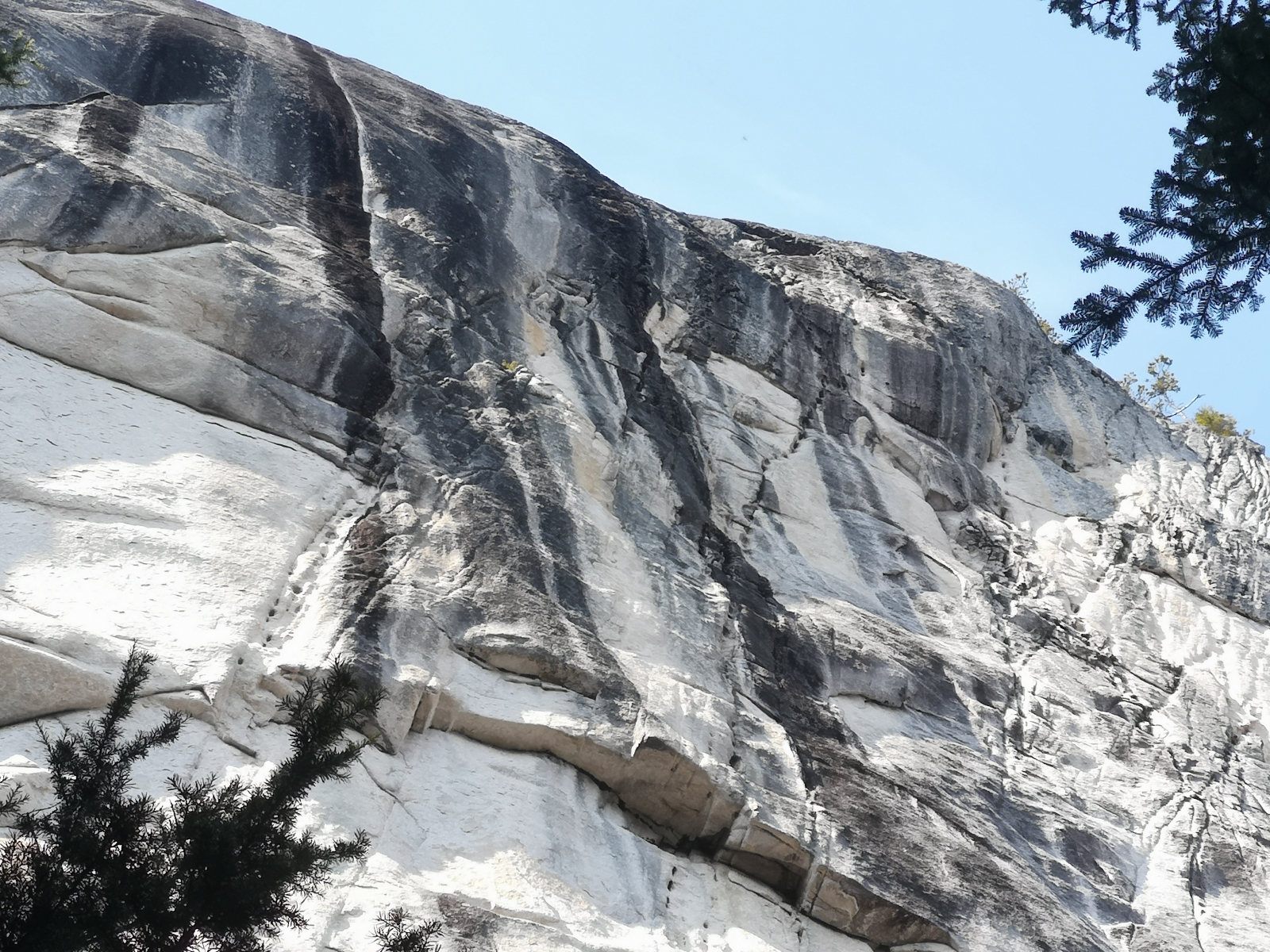
At around 950m is the "Ogres Lair" - a distinct and (to the climber's eye) very attractive rockface with great potential.
This trail system provides an interesting walk as it offers a variety of natural sights and historic features. The first trail branches off to the left to an ancient grove of culturally modified cedar trees. This area requires respect not only for the forest but also for the First Nations people that used this area for acquiring bark and lumber from these sacred and special ‘trees of life’. Look for the distinct scars left after planks were cut and split away from the living tree. This grove also features huge cottonwood, Sitka spruce and Douglas maple. Back to on the main trail, carry on past the cottonwood grove through second growth to the rodeo grounds, hike through the cottonwood grove or loop back along the beaver pond to the road and the parking area. A variety of water fowl can be seen at the pond and look for beaver gnawing signs on shoreline trees. These trails are for hiking or biking.
Potential for interpretive trail – CMT, old/new forest,